

How to Reheat Tteokbokki Without Chewy Rice Cakes
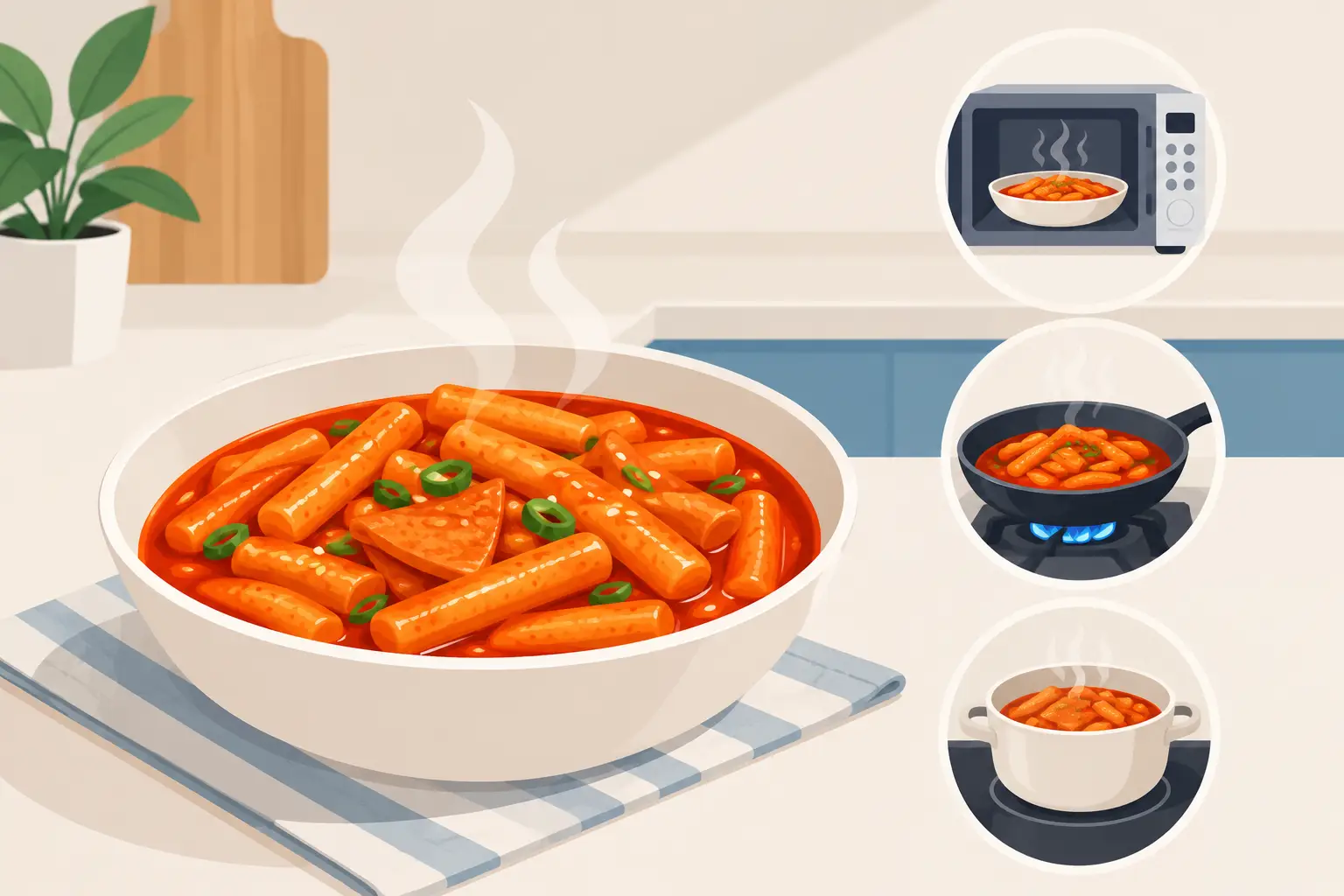
Cold tteokbokki should not be a sad, stiff leftover. When you know how to reheat tteokbokki the right way, those chewy rice cakes soften back up, the gochujang sauce turns glossy again, and the whole bowl brings back that spicy-sweet comfort-food heat.
The key is moisture and gentle heat. Rice cakes firm up in the refrigerator because their starches tighten as they cool. Blast them with high heat and they can turn tough on the outside before the center warms through. Give them a little water, keep the heat controlled, and you will get the tender, bouncy texture tteokbokki is known for.
How to Reheat Tteokbokki on the Stovetop
The stovetop is the best method for most leftover tteokbokki. It gives you control over the sauce and lets the rice cakes warm gradually instead of drying out. If your order includes fish cakes, cabbage, scallions, or a boiled egg, this method also warms everything more evenly.
Put the tteokbokki in a small saucepan or skillet. Add a splash of water – usually 2 to 4 tablespoons for a single serving. If the sauce is especially thick or the rice cakes are stuck together, start with a little more. You can always cook off extra liquid, but you cannot rescue scorched sauce with wishful thinking.
Set the pan over low to medium-low heat and cover it for the first few minutes. The steam helps loosen the rice cakes while the water thins the sauce just enough to coat them again. Stir gently every minute or so, separating any rice cakes that have clumped together.
Once the sauce starts bubbling, remove the lid and simmer for 3 to 6 minutes. The exact time depends on how cold the food is, how thick the rice cakes are, and how much you are reheating. Stop when the rice cakes are hot all the way through and feel soft and springy when pressed with a spoon.
If the sauce becomes too loose, let it simmer uncovered for another minute. If it looks dry or sticky, add another tablespoon of water. That small adjustment is what turns leftovers from merely reheated into genuinely craveable.
Can You Reheat Tteokbokki in the Microwave?
Yes, and it is a solid choice when lunch needs to happen fast. The microwave is convenient, but it needs a little care because it can heat the sauce much faster than the rice cakes.
Place the tteokbokki in a microwave-safe bowl and add 1 to 2 tablespoons of water. Cover the bowl loosely with a microwave-safe lid or plate to trap steam without sealing it tightly. Heat on high for 45 seconds, stir thoroughly, then continue in 30-second intervals until hot.
Most single portions need about 1 1/2 to 2 1/2 minutes total, depending on the microwave. Stirring matters. It redistributes the sauce, breaks apart rice cakes that have stuck together, and prevents one bite from being scorching hot while the next is still cold.
Let the bowl stand for a minute before eating. The residual heat finishes warming the center of the rice cakes, and the sauce thickens back around them. If the texture is still firmer than you like, add a teaspoon of water and heat for one more short round.
Reheating Tteokbokki in the Oven
The oven is not the first choice for a small bowl of tteokbokki, but it works well for a larger portion or a family-style tray. It is especially useful when you want to heat several Korean comfort-food dishes at the same time.
Preheat the oven to 325°F. Transfer the tteokbokki to an oven-safe dish, add a few tablespoons of water, and cover tightly with foil. Bake for 15 minutes, stir, then bake for another 5 to 10 minutes if needed. The sauce should be bubbling and the rice cakes should be tender.
Do not bake tteokbokki uncovered from the start. The sauce can reduce too quickly, especially around the edges of the dish, leaving you with dry rice cakes and overly sticky sauce. Covered heat keeps the steam where it belongs.
What to Add When the Sauce Looks Too Thick
A splash of plain water is usually all you need. It loosens the sauce without changing the flavor balance, then cooks down as the tteokbokki warms. If you want a slightly deeper savory note, use a small splash of unsalted broth instead.
Avoid adding too much water at once. Tteokbokki sauce is meant to be thick, bold, and clingy, not soupy. Add liquid a tablespoon at a time, stir, and give it a minute to come together.
If you like your tteokbokki extra spicy, a tiny dab of gochujang can bring back some heat after adding water. If it tastes a little sharp or salty after reheating, a pinch of sugar can round it out. Use a light hand – the original sauce already has a carefully built sweet, savory, spicy balance.
How to Keep Rice Cakes Soft, Not Rubbery
The biggest mistake is reheating tteokbokki too aggressively. High heat can make the exterior of the rice cakes firm and rubbery, particularly when there is not enough moisture in the pan.
Start low, add water, and give the rice cakes time to absorb steam. Refrigerated tteok can look hard at first, but it should relax as it warms. If it is still tough after the sauce is hot, keep it covered over low heat for another couple of minutes instead of turning up the burner.
Rice cakes that have been refrigerated for more than a day or two may need extra moisture and a slightly longer simmer. They are still delicious when handled gently, but freshness does make a difference. Tteokbokki is at its best when enjoyed soon after it is made, while the rice cakes are naturally soft and the sauce is bright and glossy.
Reheating Tteokbokki With Cheese, Eggs, or Fried Sides
Cheese tteokbokki needs an extra bit of attention. Reheat the rice cakes and sauce first, then add shredded cheese during the final minute on the stovetop or after the last microwave interval. Cover briefly so it melts into a gooey layer instead of overheating into oiliness.
For a boiled egg, warm it in the sauce rather than microwaving it separately. Cut it in half if you want it to heat faster and soak up more flavor. Fish cakes can go right into the pan with the rice cakes, though delicate scallions are best added near the end so they keep some fresh bite.
Korean fried chicken is a different story. Keep it separate from the saucy tteokbokki until serving time so the crust stays as crisp as possible. A bowl of hot, spicy tteokbokki beside crispy Soy Garlic or Sweet & Spicy Yangnyum chicken makes leftovers feel less like a repeat meal and more like a proper feast.
Food Safety for Leftover Tteokbokki
Refrigerate leftover tteokbokki within two hours of serving, ideally in a shallow, covered container so it cools quickly. Eat it within 3 to 4 days for the best quality. Reheat only the portion you plan to finish, rather than warming and chilling the same container repeatedly.
Heat leftovers until steaming hot throughout. If the tteokbokki smells off, has an unusual sour taste, or has been left at room temperature for too long, skip it. A fresh order is always the better move when you are unsure.
The best leftover tteokbokki is not rushed. Add that small splash of water, keep the heat gentle, and let the sauce wake up slowly. When the rice cakes turn tender and bouncy again, grab a fork, bring the heat, and enjoy every bold bite.