
How to Feed Office Groups Without Lunch Stress
The meeting is at noon, half the team skipped breakfast, and someone just asked if there will be vegetarian-friendly sides. That is the real challenge of how to feed office groups: getting enough food, enough variety, and enough flavor without turning lunch into another project on your to-do list.
A great office meal does more than fill a table. It gives people a reason to step away from their screens, catch up with coworkers, celebrate a win, or get through a long training day with something better than a sad desk lunch. The right spread should arrive organized, feel generous, and make the room smell amazing the moment the boxes open.
Start With the Headcount, Then Add a Cushion
The easiest way to under-order is to plan for the calendar invite instead of the people who will actually show up hungry. For a standard office lunch, use the confirmed headcount as your base, then add a little extra for big appetites, late arrivals, and the coworker who says they are “just grabbing one” and comes back for seconds.
For smaller teams, a few extra pieces of chicken and an additional side can make the difference between a relaxed lunch and an awkward scramble. For larger departments, extra food matters even more. People eat at different speeds, some want to try every flavor, and a variety of sides helps stretch the meal naturally.
The timing also matters. A 12 p.m. lunch usually calls for hearty portions because people are arriving hungry. An afternoon meeting, open house, or casual office celebration may need lighter portions but more snackable options. Think about the event before choosing the quantity.
How to Feed Office Groups With Food Everyone Wants
Office groups are rarely made up of people who all want the same thing. One person wants heat, another wants something savory and mild, and someone else is looking for a filling option beyond chicken. That is why variety beats playing it safe with one giant tray of the same food.
Korean fried chicken works especially well for groups because it brings serious crunch, bold sauces, and shareable portions to the table. Sweet & Spicy Yangnyum gives heat and sticky, glossy flavor. Soy Garlic brings that savory, deeply satisfying option that disappears fast. Cheesy Snow Rub adds a rich, savory-sweet finish that feels fun and familiar, even for coworkers trying Korean flavors for the first time.
The move is not to choose one flavor. Build a mix. Give the spice lovers their Yangnyum, keep Soy Garlic in the lineup for the crowd-pleasing savory choice, and add Cheesy Snow Rub for something different. A flavor spread turns lunch into a conversation starter instead of a basic catering drop-off.
Chicken should be the center of the table, but it should not be the only thing on it. Rice-based options, cupbop, tteokbokki, burritos, and savory sides give people more ways to build a meal that fits their appetite. They also help when you are feeding a group with different preferences without needing to order from three separate restaurants.
Match the Menu to the Type of Office Event
A working lunch needs food that is easy to serve and easy to eat between notes. A team celebration can be messier, bigger, and more playful. Planning around the occasion keeps the order useful instead of just abundant.
For a lunch meeting, prioritize easy-to-share chicken, rice-forward dishes, and sides that hold up well on a conference table. Keep the flavor selection balanced, especially if clients or new hires are attending. You want the food to feel exciting without making anyone guess what they can eat.
For a birthday, sales win, holiday gathering, or Friday afternoon team hangout, lean into the fun. Bring more flavors, add tteokbokki for a little heat and chew, and order enough food for people to graze. Crispy chicken is built for that kind of table: coworkers can grab a piece, sample a new sauce, and go back for another without needing a formal plated meal.
For all-day trainings or longer events, consider two waves of food. A satisfying lunch gets everyone through the middle of the day, while a smaller late-afternoon snack spread keeps energy up when attention starts to fade. The best choice depends on your schedule, your room setup, and whether people will be able to eat all at once.
Plan for Dietary Needs Without Killing the Craving
You do not need to build an endless menu of special orders. You do need to ask a few clear questions before placing the order. Check for allergies, vegetarian preferences, spice concerns, and any guests who may need separate food handling. Getting those answers early avoids last-minute stress and makes everyone feel considered.
Be specific when you communicate needs. Rather than saying, “We have a few dietary restrictions,” get the details and share them clearly with the restaurant. Ask what options are available and what ingredients may be present. This is especially important for serious allergies, where assumptions are never a good idea.
For general group preferences, a balanced order usually does the job. Include mild and spicy choices, hearty sides, and enough variety that nobody is stuck with the one item they did not want. The goal is not to make every dish work for every person. The goal is to make sure every person can find a satisfying plate.
Make Serving Easy Before the Food Arrives
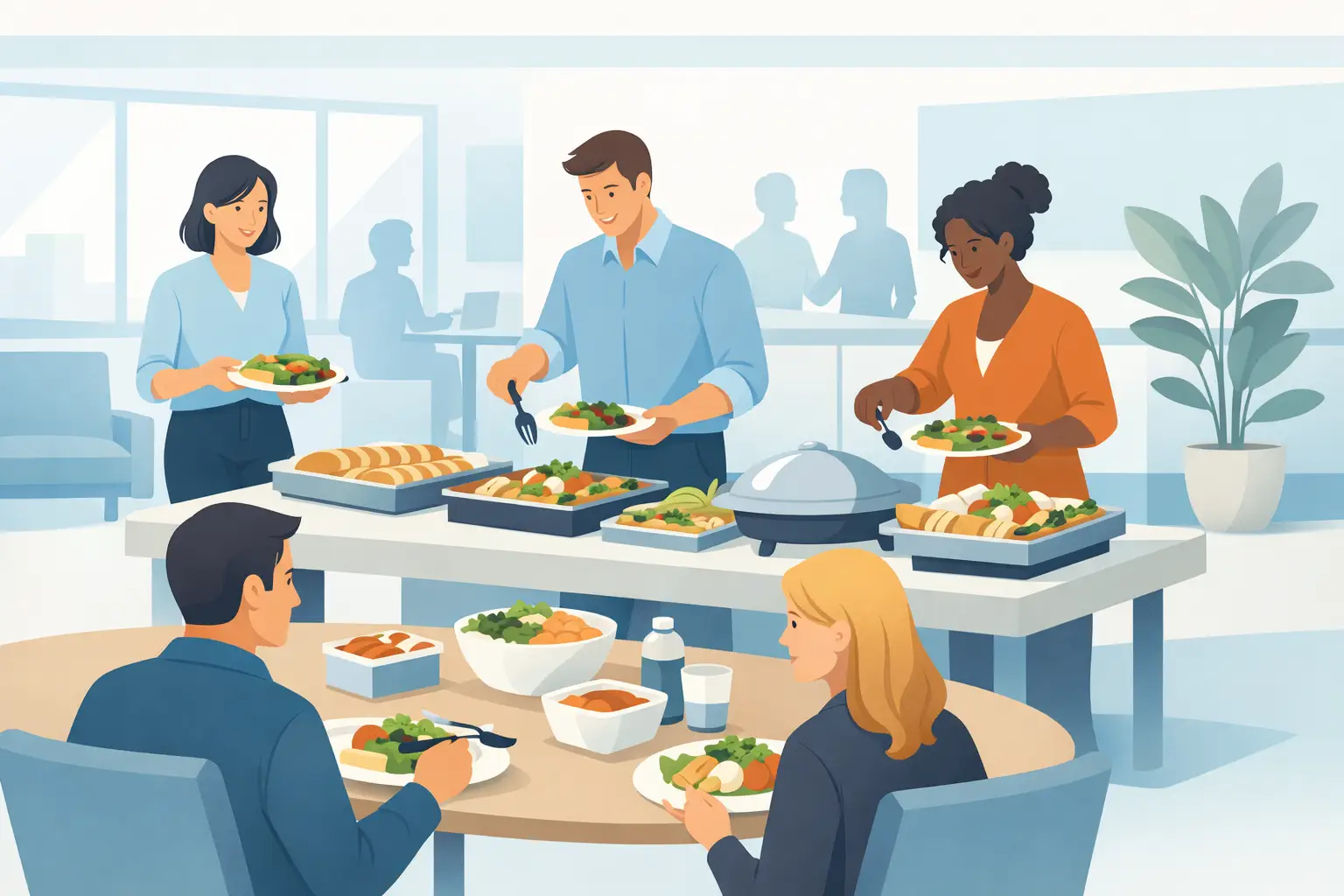
Even the best food can feel chaotic if the table is not ready. Clear a space that lets people move in one direction, place plates and napkins at the beginning, and put utensils where people can reach them without blocking the food. If you have a large team, setting up two serving points can keep the line moving.
Labeling flavors is a small detail with a big payoff. Coworkers should be able to spot spicy chicken, savory chicken, sides, and any dietary notes without asking the organizer every 30 seconds. Put sauces, wipes, and extra napkins nearby. Korean fried chicken is gloriously saucy and crunchy, which means people will appreciate having everything they need within reach.
If your office has limited seating, choose foods that travel well from the serving table to a desk. Boxes and shareable portions help, but so does planning for practical cleanup. Keep trash and recycling visible, especially for a larger event.
Order Early When the Group Matters
Office catering is not the moment for a last-minute gamble. A small spontaneous lunch may be easy to handle, but larger orders need notice so the kitchen can prepare the food properly and your team gets the full spread it expects.
Ordering ahead gives you time to confirm the count, adjust portions, collect dietary information, and choose pickup or delivery details. It also protects you from the classic office-lunch problem: everyone is hungry, the meeting has started, and the food is still being figured out.
If you are picking up food yourself, think about the drive back to the office and where you will park. If someone on the team is already out running errands, a fast drive-thru pickup can be a smart fit for a smaller group order. For bigger events, catering coordination is usually worth it because it keeps the food, timing, and quantities organized from the start.
At Friday’s in Kent, Korean-style fried chicken, cupbop, burritos, tteokbokki, and shareable sides give office groups a bold alternative to the usual sandwich tray. The key is ordering a mix that matches your team, not just checking a catering box.
Give the Team a Meal Worth Talking About
Office food does not have to be bland, predictable, or forgotten the moment the meeting ends. A crispy piece of Soy Garlic chicken, the heat of Yangnyum sauce, or a table full of shareable Korean comfort food can change the whole mood of an ordinary workday.
Plan for real appetites, choose a few distinct flavors, make room for different preferences, and get the order in before the rush. Then let lunch do what it is supposed to do: bring people together, give them a break, and leave them already asking what is on the menu next time.